


Cardiowell's hypertension blog and digital health news
Hypertension is known as the silent killer. It is because the symptoms are not noticeable, but the long-term effects on the cardiovascular system can lead to heart attacks and stroke.
The Week in Blood Pressure & Wearables — September 18-24, 2026
A smart ring started reporting blood pressure this week. In the same week, a primary care physician reminded clinicians that current guidelines say cuffless readings shouldn't drive diagnosis or treatment, and a law firm laid out how FDA went from a warning letter to a closeout on consumer blood pressure features. That's this week's deep dive.
Also this week: more than 44,000 comments on Medicare's proposed remote monitoring rules, new ACCESS Model tracks for 2027, and a large English study showing how many adults with high blood pressure are still undiagnosed.
The Week in Blood Pressure & Wearables — September 11-18, 2026
Medicare just put a price on technology-supported chronic care, and it did not wait for the wearable industry to sort out what "cuffless blood pressure" actually means. Both stories matter to anyone building remote patient monitoring for hypertension, and they are more connected than they look.
This week's roundup pulls from six Google Alert categories (blood pressure, wearable health technology, heart rate variability, chronic care management, telemedicine, and digital health) plus Blythe Karow's "The Device Files" newsletter. It was a busy week for Medicare policy and consumer wearables, and a quiet one for heart rate variability and chronic care management outside of the Medicare news itself, both of which produced mostly noise once you strip out consumer fitness roundups and unrelated disease-management coverage.
Cardiowell is part of the new CMS Medicare ACCESS Program
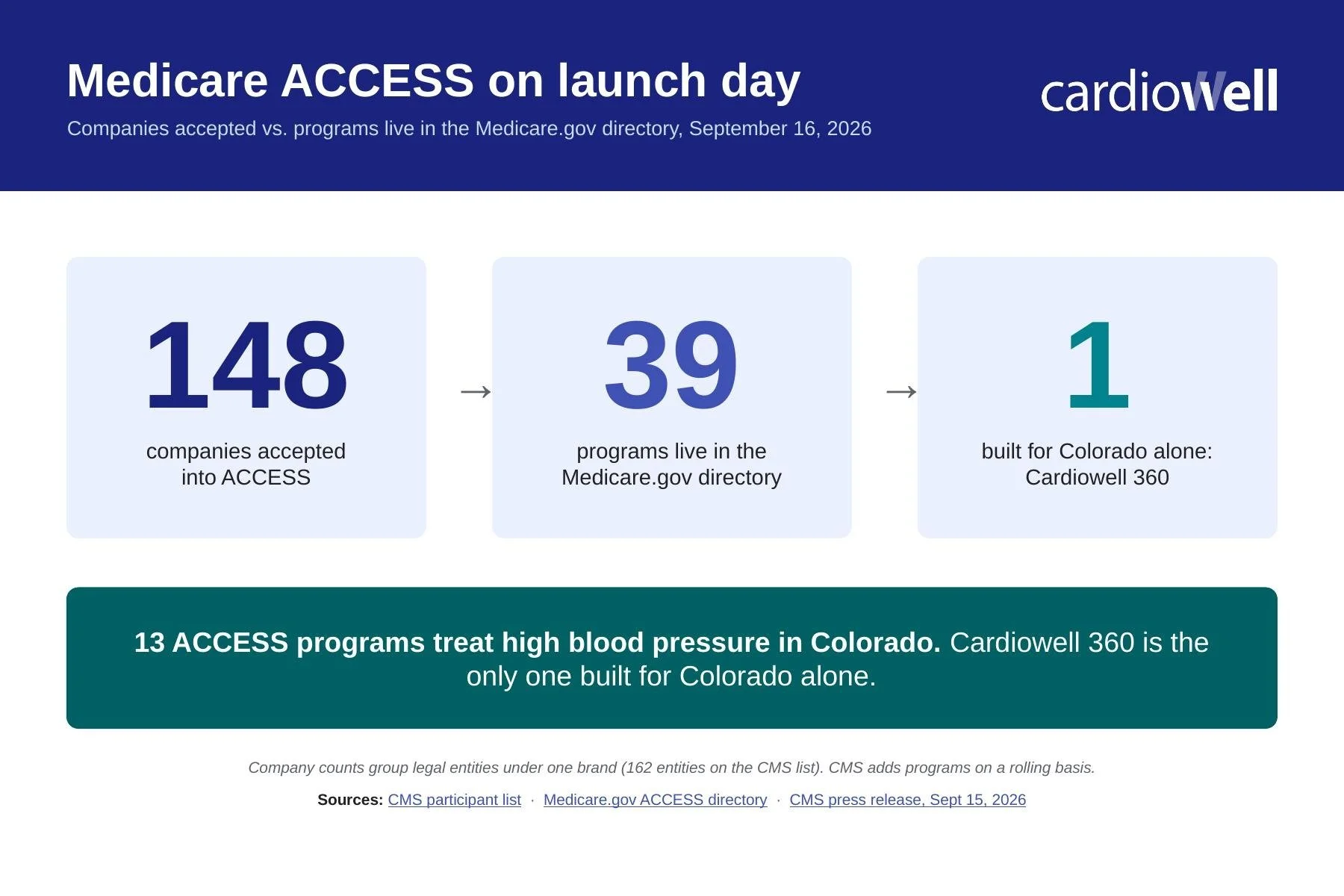
On September 15, 2026, the Centers for Medicare & Medicaid Services (CMS) held the formal launch of the ACCESS Model and opened a public directory where people with Medicare, and their doctors, can find participating programs [1].
Cardiowell 360 is in that directory. We serve Original Medicare patients in Colorado who have high blood pressure, high cholesterol, obesity or prediabetes, at $0 a month to the patient [2].
This week I compared the list of companies CMS accepted into ACCESS with the list of programs that were live in the directory. The gap between the two lists says a lot about how hard it is to launch a program under this model.
The Week in Blood Pressure & Wearables — September 4-10, 2026
The Week in Blood Pressure & Wearables — September 4-10, 2026
The Week in Blood Pressure and Wearables — August 28–Sept. 3, 2026
The Week in Blood Pressure and Wearables — August 28–Sept. 3, 2026 — Cardiowell
The Week in Blood Pressure & Wearables — August 22–28, 2026
The Week in Blood Pressure and Wearables — August 22–28, 2026 — Cardiowell
The Week in Blood Pressure & Wearables — August 14–21, 2026
The Week in Blood Pressure & Wearables — August 14–21, 2026
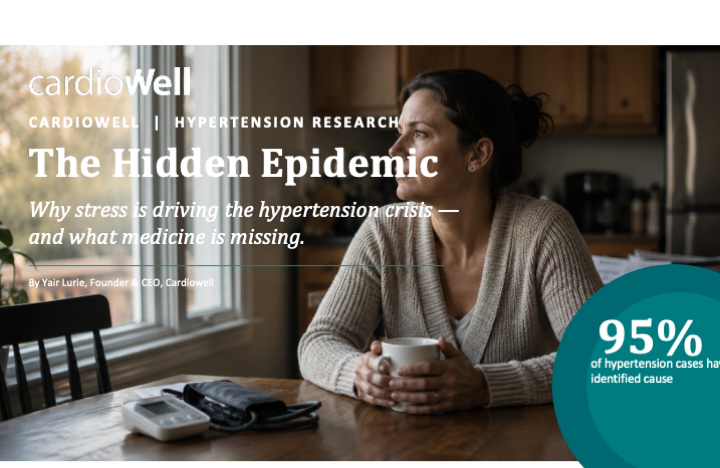
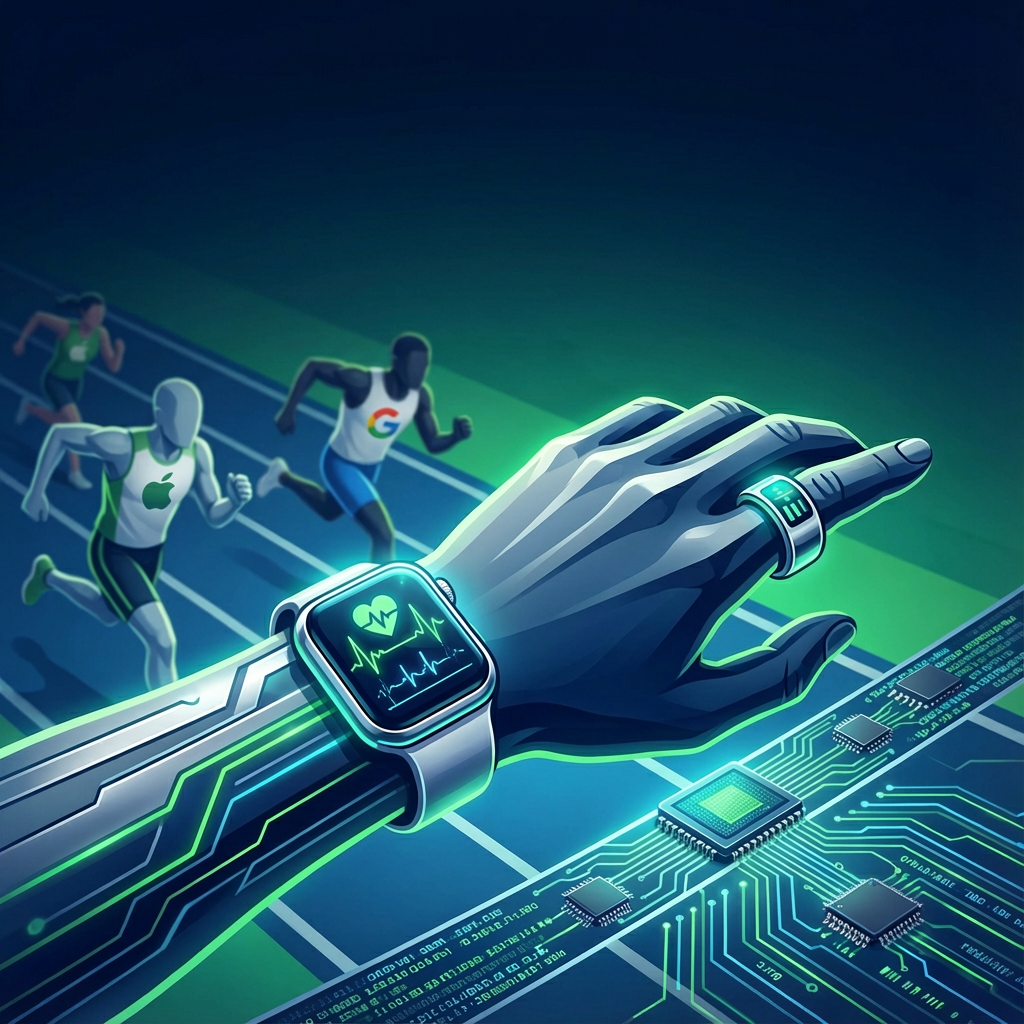
The Race for the Wrist and Finger: The New Era of Continuous Blood Pressure Monitoring and the Tech Giants Battling to Lead It
Blood pressure has long been a snapshot metric, but a new era is emerging where it can become continuous, passive, and personalized. Wearable tech from wrist devices to smart rings is pushing boundaries, while accuracy, regulatory clarity, and real world validation remain critical. If we get this right, it could fundamentally change hypertension care and preventive health.
Read more on how leading tech giants are competing to lead this shift and what it means for the future of health monitoring.
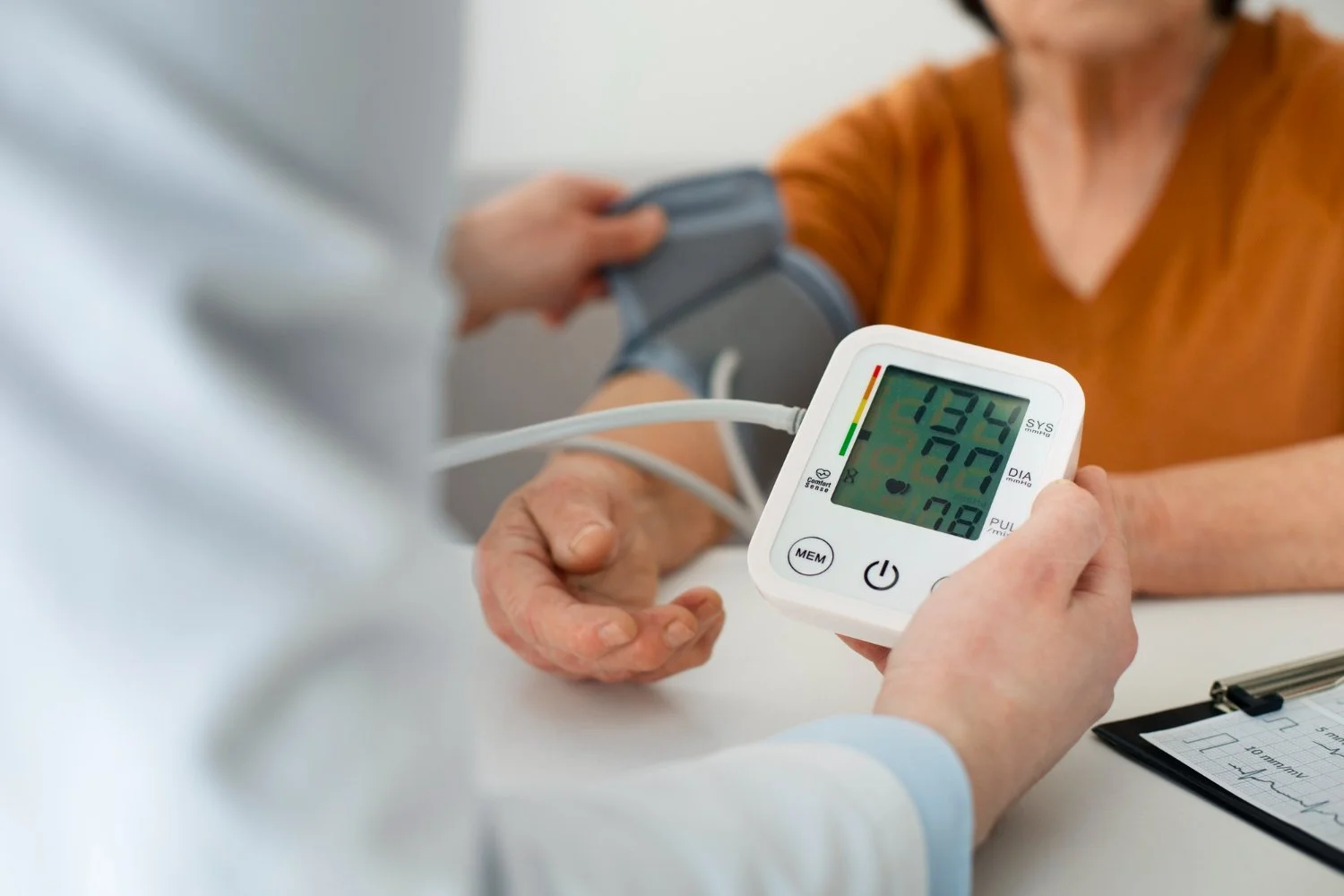
The Promises and Challenges of Continuous Blood Pressure Monitoring: Comparing Apple and Samsung
Discover the promises and challenges of continuous blood pressure monitoring in Apple and Samsung smartwatches, including accuracy, FDA approval, and innovations.

Charting the Future of Hypertension Care: Cardiowell’s Take on the Peterson Report
Medications play a pivotal role in bringing blood pressure down quickly, and the Peterson Health Technology Institute (PHTI) report highlights how effective they can be as a first line of defense.

How to Fix Failing Remote Patient Monitoring (RPM) and CCM Programs
Learn why Remote Patient Monitoring (RPM) and CCM programs fail—and how planning, training, and engagement can ensure success.

The Future of Hypertension Management: Embracing Continuous Monitoring
Continuous monitoring isn't just an innovation—it's a necessity. It empowers individuals to take control of their health, helps clinicians make precise decisions, and reduces the burden of chronic diseases.

Choosing the Right Wireless Technology for Effective Remote Patient Monitoring
Doctor doing remote patient monitoring

The Silent Threat: How Blood Pressure Monitors Expose Hidden Health Dangers
Blood pressure monitors stand as silent guardians in our efforts to maintain good health.
These devices aren’t just tools. They are windows into our cardiovascular well-being, revealing what often remains unseen to the naked eye.

Unlocking Blood Pressure Symptoms: Subtle Signs Exposed
When it comes to health, our bodies often speak to us through subtle signals.
These whispers, if left unattended, can turn into screams.
That's why listening to your body and paying attention to any signs that could indicate a blood pressure issue is important.

The Hidden Danger: Why High Blood Pressure Often Goes Unnoticed
High Blood Pressure, often called the "Silent Killer," is a health condition that stealthily affects millions worldwide.
This silent intruder poses a grave threat, lurking unnoticed until it strikes with potentially devastating consequences.
At Cardiowell, we believe in empowering individuals to take control of their health, especially when it comes to the stealthy high blood pressure adversary.

How Do Cellular Blood Pressure Devices Work? Unraveling the Technology
High blood pressure, or hypertension, presents a significant health risk that demands efficient management. Alarming statistics reveal that one in two Americans over the age of 20 suffers from hypertension.

Cellular Blood Pressure vs. Bluetooth: Navigating the Best Choice for Remote Patient Monitoring
Technological advancements are making way for new methods that promise improved patient outcomes.
One significant leap is using wireless communication technologies such as Cellular Blood Pressure (CBP) and Bluetooth.

The Power of Remote Patient Monitoring in Lowering Blood Pressure
Managing blood pressure is crucial for maintaining better cardiovascular health. However, it can be challenging for patients who may need access to healthcare professionals or struggle with regular doctor visits. This is where remote patient monitoring, with devices like blood pressure and heart monitors, comes in.

